

Global Leading Landfill Leachate PFAS Treatment Solutions Provider: A Guide for Waste Management Operators
Navigating the Complex Matrix: Why Landfill Leachate Demands Next-Generation PFAS Removal
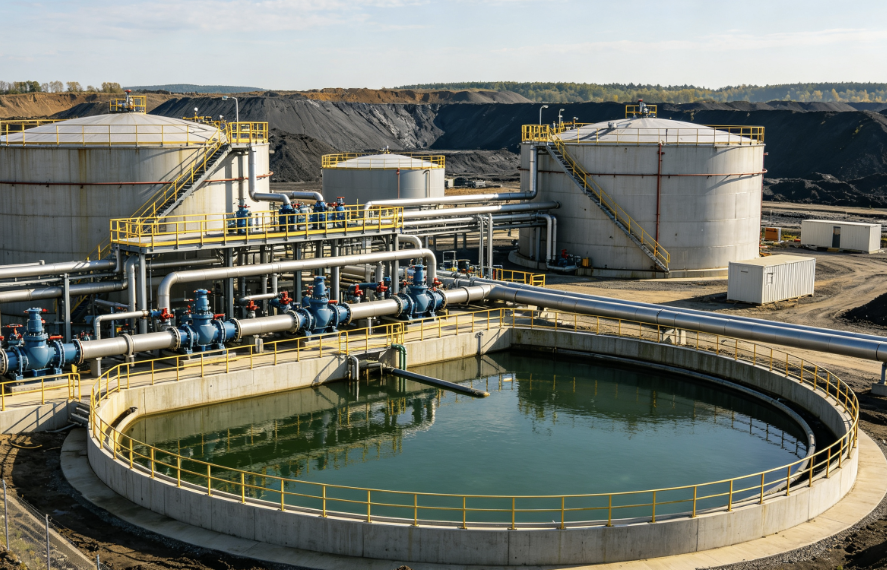
Landfill leachate represents one of the most difficult aqueous matrices to treat in modern environmental engineering. Rainwater percolating through decaying waste gathers a dense cocktail of dissolved organic matter, inorganic salts, heavy metals, and synthetic compounds. Within this matrix, per- and polyfluoroalkyl compounds—commonly referred to as PFAS or "forever chemicals"—exhibit extreme chemical stability due to their strong carbon-fluorine bonds. Environmental authorities now mandate strict discharge limits because these compounds bioaccumulate in ecosystems and pose serious long-term health risks.
Traditional water treatment technologies frequently fail when applied directly to raw or partially treated leachate. For example, Granular Activated Carbon systems suffer from rapid organic fouling and competitive adsorption. High background levels of Total Organic Carbon saturate activated carbon pores, forcing operators to replace media frequently at exorbitant costs. Similarly, Reverse Osmosis membranes can separate PFAS molecules, but they generate massive volumes of liquid concentrate that require costly secondary treatment. Furthermore, high salinity and scaling agents quickly clog membrane surfaces, leading to frequent downtime. Therefore, waste management facilities require advanced separation media that target synthetic fluorinated compounds without dying prematurely in high-TOC environments.
Decoupling Matrix Interference: Selective Ion Exchange Mechanics with SEPLITE® Resins
Specialized ion exchange resins offer a highly effective alternative by decoupling target contaminant capture from general organic background loading. Engineered strong base anion resins utilize fixed quaternary ammonium functional groups paired with tailored polymer matrices. These specialized structures operate through a dual-mechanism approach. First, electrostatic forces draw negatively charged PFAS heads to the positively charged functional sites. Second, hydrophobic interactions bind the fluorinated carbon tails to the crosslinked polystyrene backbone. This combined sorption mechanism enables the resin to selectively capture both long-chain compounds, such as PFOA and PFOS, and elusive short-chain variants.
Under high background salinity conditions, conventional anion resins often exhaust quickly as chloride and sulfate ions occupy active sites. In contrast, advanced media such as the SEPLITE LSI 106G series maintain exceptional target selectivity. The uniform bead structure and targeted pore size distribution prevent large humic molecules from blocking access to internal functional groups. Moreover, ion exchange resins exhibit much faster sorption kinetics than standard carbon beds. This rapid mass transfer allows design engineers to operate systems at significantly higher empty bed contact times and smaller column volumes. As a result, facilities achieve target reductions down to non-detectable levels while reducing overall footprint requirements by over fifty percent.
Synergistic Pretreatment Architecture: Safeguarding Resin Bed Life & Continuity
Although advanced ion exchange resins possess high selectivity, prolonged operational lifespan depends heavily on proper upstream protection. Unfiltered landfill leachate contains suspended solids, emulsified oils, and high molecular weight organic acids that can foul resin beads over time. Therefore, modern facility designs incorporate a multi-barrier pretreatment architecture upstream of the polishing resin columns.
Initial treatment stages typically employ chemical coagulation, dissolved air flotation, or sand filtration to reduce total suspended solids. Following primary clarification, biological treatment or organic scavenger resins remove broad-spectrum organic molecules. In many complex industrial sites, operators integrate these stages into comprehensive <a href="https://www.seplite.com/wastewater-treatment-reuse/">wastewater treatment and reuse solutions</a> that reclaim process water while isolating concentrated waste streams. Incorporating organo-clay or sacrifice carbon beds directly before the final resin vessels further shields the media from oil and grease contamination. This structured multi-stage design ensures that downstream ion exchange columns receive consistent water quality, thereby extending bed life, maintaining lower pressure drops, and preventing premature breakthrough.
Lifecycle Economics & Secondary Waste Optimization: Maximizing Operator TCO
Evaluating treatment technologies requires a thorough analysis of Total Cost of Ownership rather than simple capital expenditure comparisons. While specialized synthetic resins represent a higher initial capital investment than traditional carbon media, their significantly higher operating capacity delivers lower long-term expenditures. Resin beds typically treat exponentially more bed volumes of water before reaching breakthrough, drastically reducing media turnover frequency. Consequently, operators spend significantly less on media freight, changeout labor, and system downtime over a multi-year operating lifecycle.
Furthermore, secondary waste management remains a major cost driver in PFAS remediation projects. Spent treatment media laden with toxic fluorinated compounds must undergo high-temperature incineration or secure hazardous landfill disposal. Because selective anion resins achieve far higher mass loading per unit volume than activated carbon, they generate a fraction of the solid waste volume upon exhaustion. Facilities can choose between single-use high-capacity resin configurations that minimize handling risks or regenerable systems that concentrate contaminants into small waste fractions. Ultimately, generating smaller spent media volumes substantially lowers hazardous transport and destruction fees, providing landfill operators with a predictable and sustainable operational cost structure.
From Lab Bench to Turnkey Execution: Sunresin’s Integrated EPC Capabilities & Quality Safeguards
Delivering reliable separation performance in unpredictable leachate environments demands both advanced material science and robust engineering execution. As a global technology provider, <a href="https://www.seplite.com/sunresin-profile/">Sunresin (Sunresin New Materials Co. Ltd.)</a> integrates material manufacturing with full-scope system engineering. Operating advanced production complexes with an annual resin capacity of 100,000 cubic meters, the enterprise maintains rigorous quality controls accredited under ISO9001 and international potable standards including NSF/ANSI 61. Listed on the Shenzhen Stock Exchange under code SZ300487, the company provides financial stability and long-term technical backing for large-scale municipal and industrial environmental projects.
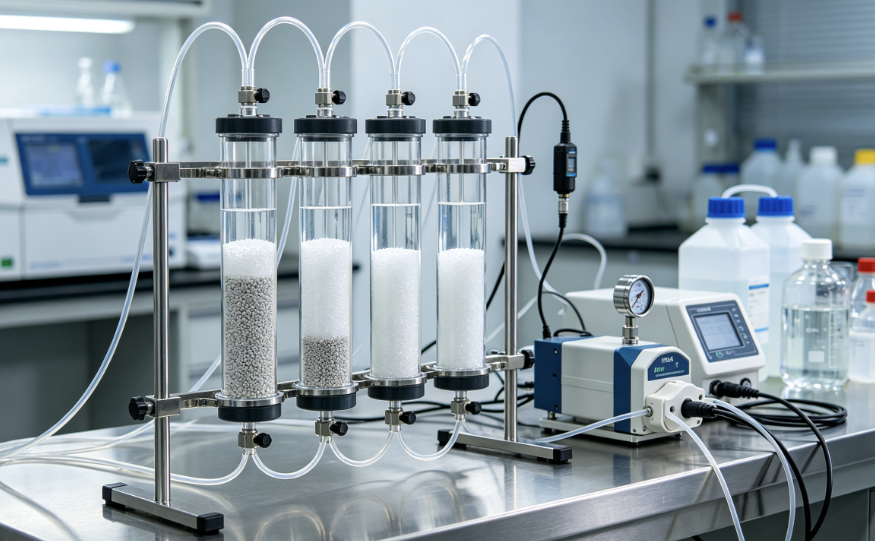
The company executes engineering projects through a systematic Engineering, Procurement, and Construction framework. Process engineers begin each engagement by analyzing site-specific water samples in specialized separation laboratories. Based on detailed contaminant fingerprinting, research teams select or customize the optimal resin matrix and design tailored column geometry. Following process validation, manufacturing teams fabricate modular skid-mounted equipment, integrate automation controls, and manage complete logistics delivery. Field specialists subsequently oversee site installation, system commissioning, and operator training. Furthermore, technical support teams deliver ongoing performance monitoring and rapid-response field assistance throughout the facility lifecycle.
Partnering with Sunresin: Elevating Leachate Compliance & Environmental Stewardship
Achieving long-term regulatory compliance requires moving beyond standardized off-the-shelf equipment toward customized, data-driven separation strategies. Environmental managers can evaluate potential treatment performance through structured bench-scale testing and mobile pilot sorption modules prior to full-scale capital commitment. These pilot studies establish exact breakthrough curves, optimize pretreatment configurations, and verify operating cost projections under actual field conditions.
By collaborating with an experienced separation technology partner, waste management operators transform complex leachate liabilities into manageable, compliant discharges. Sunresin continues to pioneer advanced separation materials and equipment solutions, helping industrial and municipal clients protect surrounding watersheds from persistent chemical pollutants. Through continuous innovation, rigorous manufacturing standards, and dedicated engineering support, the enterprise provides the waste management industry with a reliable path toward sustainable environmental stewardship.
For more technical specifications and solution details, visit: <a href="https://www.seplite.com/">https://www.seplite.com/</a>.
Sunresin
Sunresin
email us here
Legal Disclaimer:
EIN Presswire provides this news content "as is" without warranty of any kind. We do not accept any responsibility or liability for the accuracy, content, images, videos, licenses, completeness, legality, or reliability of the information contained in this article. If you have any complaints or copyright issues related to this article, kindly contact the author above.
